
Welcome to the Kaplan Award, showcasing student work from the UW Journalism and Public Interest Communication Program.
This site features work from students in our narrative journalism course. Narrative journalism is a genre of feature writing that combines rigorous reporting with fiction-writing techniques and eschews dramatic, news-making events to focus on everyday life and ordinary people. The genre is not new—some scholars trace its beginnings to the days before mass-circulation newspapers. It flourished spectacularly in the 1960s and 1970s when the so-called “new journalists”—Tom Wolfe, Truman Capote, Norman Mailer, Joan Didion, Jimmy Breslin, Gay Talese, Gloria Emerson, Michael Herr, Lillian Ross, and Hunter S. Thompson—deployed literary techniques to counter the staid reporting of the establishment press. Also known as literary journalism, immersion journalism, creative nonfiction, and even the new, new journalism—narrative journalism has continued to prosper as an alternative to the news industry’s glut of dumbed-down and formulaic news.
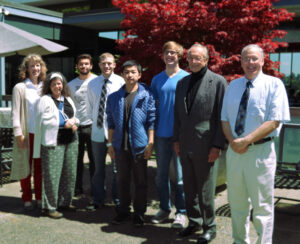
For more than a decade, University of Washington students have had the opportunity to try out for themselves this flourishing genre of creative non-fiction writing. The narrative journalism course was developed by Deb Kaplan, who joined the UW Communication Department after a notable career as a journalist at the Detroit Free Press and other daily newspapers, as well as the editor of Detroit Metro, a paper for street people and the underprivileged. After Deb died in 2006, her brother, Gordon, endowed the Kaplan Awards, which are given each year for the top works of narrative journalism by UW students. Deb—who was inspired to “give voice to the voiceless,” as her brother put it—believed in the use of immersion style reporting, and she worked in the fields with migrant workers and slept in a tent in homeless camps while researching her own stories. The class has continued to be taught by UW faculty in Deb’s spirit, and the awards reflect her concerns about social justice and treatment of marginalized people.
The awards are given in five categories:
- A story about people on the margins
- A story involving an important public issue
- A human personality profile (proving that there is a “story” in anyone’s life)
- A story that demonstrates an “epiphany” (or a deeper story)
- A story with a strong writing style
Here you can see examples of the impressive writing talents of UW students who have been given the opportunity to “think outside the box” and to produce journalism that seeks to demonstrate many of the qualities of literature.
About Deborah Kaplan:
Every year, the Department of Communication gives five outstanding students a Kaplan Award for their excellence in narrative writing in the categories of: people on the margins, strong writing style, a human personality profile, a strong epiphany, and an important public issue. This award is presented in honor of Deborah Kaplan, who was known for her no-quit attitude, relentless investigative reporting, and in-depth interviewing. After joining the faculty of the UW Department of Communication in 2003, Kaplan experienced an apparent heart attack, which led to an unexpected death in 2006 at age 53.
But her legacy in journalism lives on. Born in Chicago to parents who weren’t afraid to participate in avid activism, Kaplan chose a different path than her two siblings who both became attorneys. Kaplan became the Metro Times news editor from 1989 to 1991, after four years at the Detroit Free Press. She was recognized for illuminating the lives of ordinary and overlooked people – sleeping in tents to report about the homeless, working in the fields to write about migrant workers, and sitting through countless patriot group meetings to find out about their politics.
Upon leaving the newspaper industry, Kaplan started a tabloid produced by inner-city teens and returned to college to finish her undergraduate degree. She continued her education by earning a master’s in social science at the University of California-Irvine and a doctorate in journalism and mass communication at the University of North Carolina. While teaching narrative journalism as an assistant professor at the UW, Kaplan started a website for students to showcase their work – now the goal of the Kaplan Quarterly.