
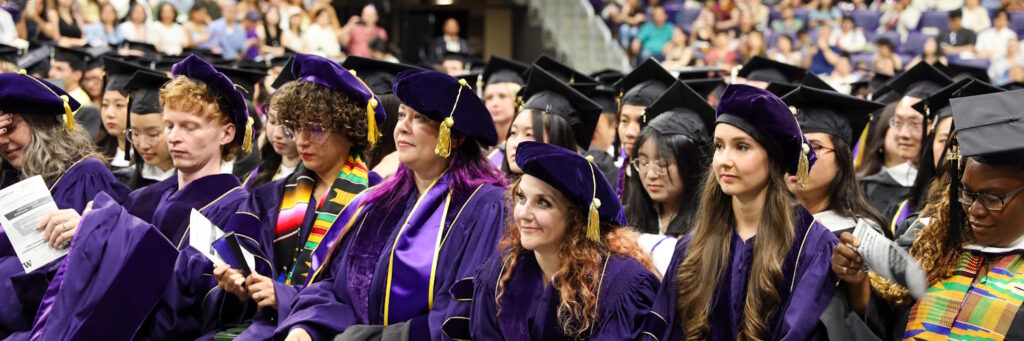
In a world increasingly defined by political polarization, platform algorithms, and the rapid spread of misinformation, understanding how we communicate is no longer just an academic exercise; it is essential to addressing society’s most pressing crises and discovering innovative solutions.
“Communication increasingly is at the center of so many social and political and scientific and economic issues that we’re facing today,” explains Professor Adrienne Russell. While much of the public focus is on communication breakdowns, Russell points out that the University of Washington’s Department of Communication MA/PhD program is invested in understanding the structures and practices behind why things are the way they are. “Our researchers not only unpack the problems, but also highlight the conditions behind these problems and possible solutions.”
The program relies on a unique blend of high-level rigor and deep collegiality. Unlike some graduate programs where students primarily support their advisor’s research agenda, UW Communication takes a different approach. “We invite students in, and we really highlight and focus in on what they want to do and what they’re interested in,” Russell notes.
The result is a cohort of emerging scholars driving innovative, boundary-pushing research that tackles contemporary media from every angle.
For PhD student Nicole Zhang, that means investigating the intersection of media technology and global politics. Zhang’s research compares how democratic and authoritarian news media cover the same events. Currently, she is looking at how audiences consume news on TikTok, specifically focusing on the app’s newer search functions in the comments section and how they shift young people from incidental news encounters to active exploration.
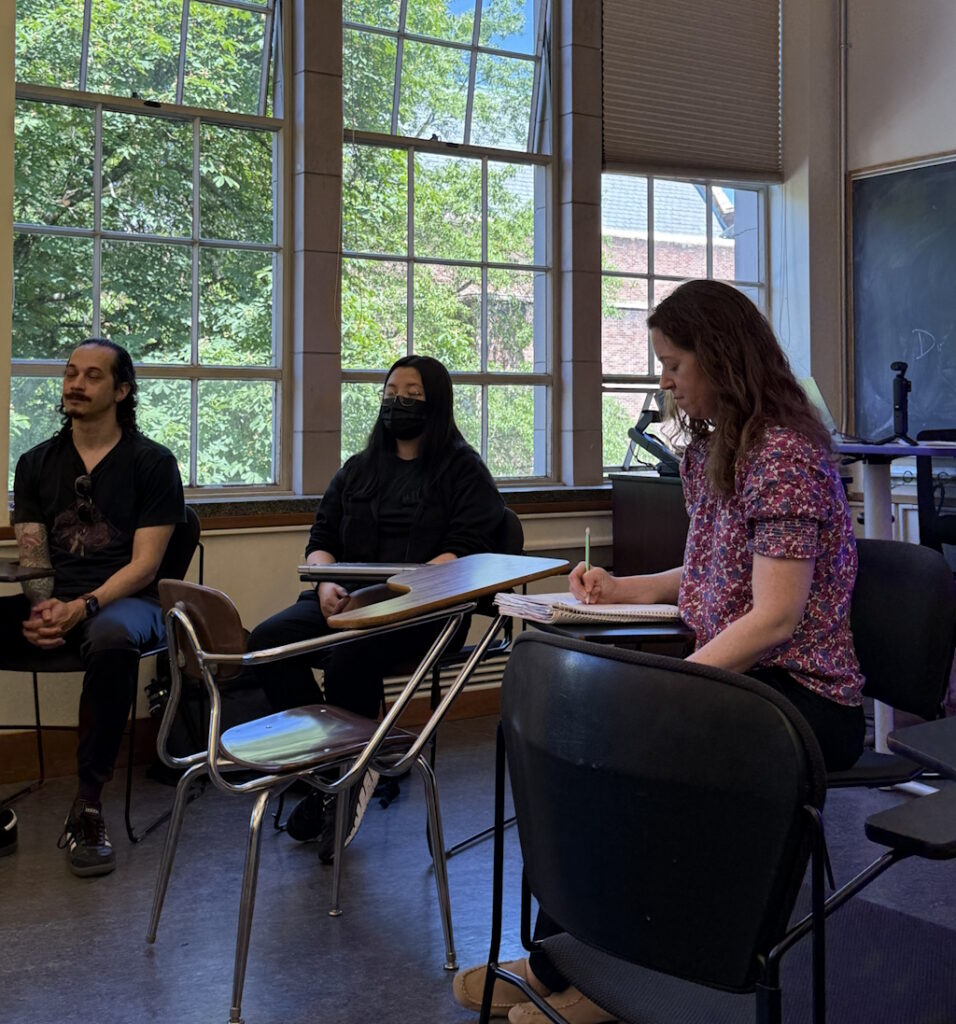
Meanwhile, PhD student Brooke Fisher is exploring the civic infrastructure of Washington state. Working with her collaborators in the Center for Journalism, Media, and Democracy (CJMD), Fisher has analyzed thousands of public information requests submitted to the Department of Ecology to understand how open records laws crafted primarily for journalists in the 1960s and 70s are actually being utilized today. Fisher is also beginning critical research into how private equity ownership impacts the quality of local newspapers.
For Jennifer Zheng, a PhD student studying the intersections of race, gender, and power on social media, the focus is on the digital labor we consume daily but rarely analyze. Her dissertation explores Asian American food creators on platforms like TikTok. By conducting interviews with these creators, Zheng unpacks how they navigate algorithms, handle online hate, and perform invisible labor, all while pushing back against historical stereotypes and fighting for equitable compensation in the influencer industry.
What unites these diverse topics is a shared departmental ethos. “I can’t think of one person or project that doesn’t in some way address the relationship between communication and social good or public interest,” Russell says.
This research does not happen in a vacuum. The graduate students point to a deeply supportive, interdisciplinary community that elevates their work. Nicole Zhang highlights the weekly CJMD meetings where students receive cross-disciplinary feedback from qualitative experts and data scientists alike. Jennifer Zheng emphasizes the freedom to take and teach classes across departments, like American Ethnic Studies, and praises the robust professional development seminars run by Dr. Patricia Moy.
“I feel like I have support on many levels,” Fisher says, noting everything from faculty guidance to a student-led mentorship program and community-building outings at local breweries and Mariners games.
Crucially, the impact of the MA/PhD program flows directly back into the undergraduate experience. All three students serve as teaching assistants or instructors, bringing their cutting-edge research straight into the classroom.
Fisher finds immense reward in helping nervous undergraduates find their voice in public speaking and has even recruited undergrads to assist in her media ownership research. Zhang notes that fielding questions from undergrads about qualitative research methods actively sharpens her own scholarly understanding.
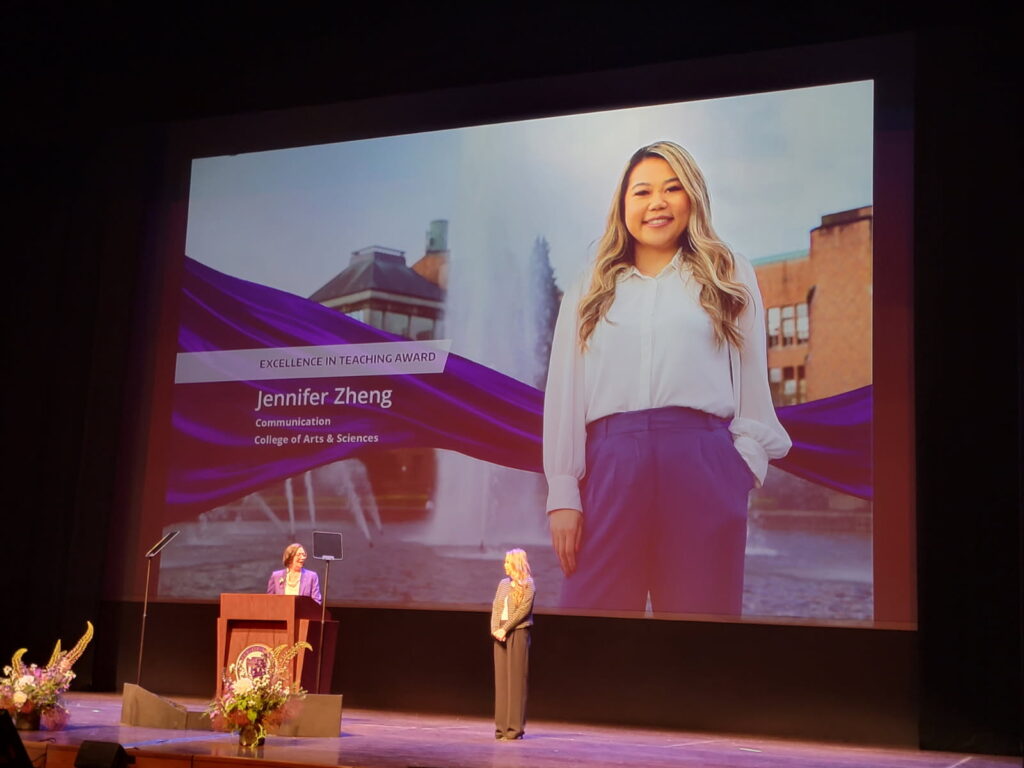
Zheng, who this spring won the University of Washington’s prestigious Excellence in Teaching Award, takes this integration a step further. While teaching a class on Asian American stereotypes in the media, she reached out to a TikTok creator with six million followers. The influencer flew from Las Vegas to Seattle just to speak to Zheng’s students about her real-world experience as a female creator online. “I love integrating what I know about the field and my areas of interest with teaching,” Zheng shares.
Ultimately, the MA/PhD program is doing much more than producing academic papers. It is shaping professionals who will leave the university equipped to cut through disinformation, navigate a complex, globalized world, and hold our communication systems accountable. Whether these scholars transition into tenure-track professorships, industry roles, or public sector positions, they carry with them “the ability to critically engage with structures, policies and practices that shape our society and media systems today,” says Russell.
To learn more about the UW Department of Communication’s graduate programs and how you can support this vital research, visit the MA/PhD program page.